
The decision to pursue a Post Graduate Diploma in Management (PGDM) is rarely about whether the degree holds value; it is almost always about timing. For most young professionals, the window between eighteen and thirty-six months of professional experience represents a critical inflection point. Entering a program too early often results in a purely academic experience, while waiting too long can lead to diminishing returns as the opportunity cost of leaving a mid-level salary rises.
Two years of work experience is often cited as the “sweet spot” because it provides enough context to understand how businesses actually function without the rigid habits that can sometimes form after a decade in a single industry. At this stage, you have transitioned from a trainee to a contributor. You have likely navigated a performance review cycle, managed a project deadline, and witnessed the friction that occurs when departmental goals clash. These experiences are the raw materials that turn a theoretical management curriculum into a practical toolkit.
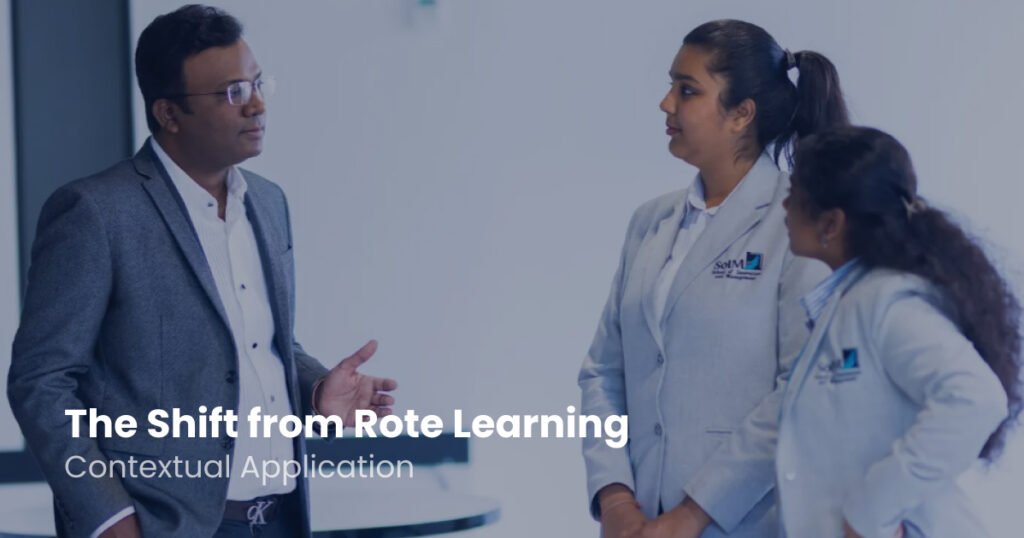
The Shift from Rote Learning to Contextual Application
In a traditional undergraduate setting, success is measured by the ability to absorb and reproduce information. In a PGDM program, the metrics change. The value lies in the ability to analyze, synthesize, and defend a position. When a professor introduces a module on Lean Six Sigma or Agile methodologies, a student with zero experience views it as a list of steps to memorize.
A professional with two years of experience, however, views it as a solution to the supply chain bottleneck they witnessed in their previous role. They can pinpoint exactly where a project failed because the “People” element of the “People-Process-Technology” triad was ignored. This ability to map theory onto a mental library of past events creates a deeper level of retention. You aren’t just learning what a SWOT analysis is; you are applying it to the company you just left, identifying the threats they missed and the strengths they underutilized.
Why 24 Months Provides a Strategic Advantage
1. Refined Career Direction and Specialization
One of the most common mistakes made by fresh graduates is choosing a specialization based on external factors: what their parents suggest, what their peers are doing, or which sector currently offers the highest starting bonuses. This often leads to a “mid-career crisis” only a few years after graduation.
Two years in the workforce acts as a diagnostic phase. You may discover that while you enjoy the creativity of marketing, you have a much higher aptitude for the data analytics that drive it. Or, you might find that your interest in finance is less about investment banking and more about corporate treasury and risk management. By the time you start your PGDM, your choice of specialization is an informed decision based on documented strengths rather than a guess.
2. The Credibility of Your Classroom Voice
Management education is built on the case-study method. In this environment, the professor acts more as a moderator than a lecturer. The real learning happens through the debate between peers.
When you have two years of experience, your contributions carry weight. You can speak to how a specific change in tax law affected your department’s budget or how a cultural nuance impacted a client negotiation. This peer-to-peer learning is often more valuable than the core text. Being in a cohort of individuals who have all “been in the room” creates a high-pressure, high-reward environment that simulates real-world executive boardrooms.
3. Financial Literacy and Resource Management
There is a fundamental difference between managing a personal allowance and being responsible for a corporate budget, no matter how small. Experience in the workforce introduces you to the concepts of “burn rate,” “ROI,” and “opportunity cost” in a visceral way. When you pay for your own degree—or at least contribute to the financing through savings or a loan based on your previous salary—your approach to the curriculum becomes much more disciplined. You view the PGDM not as a continuation of school, but as a capital investment that needs to yield a specific return.
The Recruitment Calculus: Why Firms Prioritize Pre-Experienced Candidates
From a recruiter’s perspective, a candidate with two years of experience plus a PGDM is a “plug-and-play” asset. This preference is driven by several practical factors that go beyond what is listed on a resume.
Risk Mitigation
Hiring is an expensive and risky process. A fresh graduate is an unknown quantity in a professional environment. Do they know how to communicate with stakeholders? Can they handle the pressure of a quarterly close? Do they understand office etiquette and professional accountability?
A candidate with two years of experience has already answered these questions. They have a documented track record of showing up, delivering work, and functioning within a corporate hierarchy. For a hiring manager, this significantly reduces the risk of a “bad hire.”
Accelerated Onboarding
A professional who has already worked in a corporate setting requires significantly less hand-holding. They understand the basics of project management software, corporate communication, and team dynamics. This allows the hiring company to focus on training them for the specific strategic requirements of the new role, rather than teaching them how to be an employee. Consequently, these candidates often command higher starting salaries and are fast-tracked into leadership roles.
Lateral vs. Entry-Level Placement
While fresh graduates are usually recruited into “Management Trainee” or “Analyst” roles, those with two years of experience are often eligible for “Lateral” roles. These positions come with more autonomy, larger budgets, and a more direct path to senior management. In many cases, the salary difference between these two entry points can be substantial, often allowing the experienced candidate to recoup their tuition costs much faster.
Comparing the Paths: Fresh Graduate vs. Experienced Professional
| Feature | Fresh Graduate Entry | 2-Year Professional Entry |
|---|---|---|
| Learning Model | High focus on theoretical mastery. | Focus on problem-solving and application. |
| Networking | Building a network of future peers. | Building a network of future collaborators and industry leads. |
| Interview Quality | Relies on academic projects and hypothetical answers. | Based on actual achievements, KPIs, and professional conflict resolution. |
| Maturity Level | Transitioning into adulthood and professional life. | Refining leadership style and strategic thinking. |
| Placement Outcome | Entry-level corporate roles. | Mid-level management or strategic consultant roles. |
The ROI of Waiting: A Financial and Professional Perspective
Waiting for two years to pursue a PGDM is often a difficult decision because of the “delayed gratification” aspect. However, the return on investment (ROI) is generally higher for those who wait.
Consider the “Experience Premium.” A student who enters a PGDM immediately after college might graduate and earn a 100% increase over what they would have earned as a fresher. However, a student who works for two years, earns a promotion, and then completes a PGDM often sees a significantly higher jump because their post-degree salary is stacked on top of an already higher base.
Furthermore, many top-tier institutes offer “Executive” or “Accelerated” tracks for those with experience, which can sometimes be completed in less time or with more flexibility, further improving the ROI.
Navigating the Transition Back to Student Life
Returning to the classroom after earning a salary requires a mindset shift. You go from being a person with a title and authority to being one of many students. This transition can be humbling, but it is also an opportunity to “unlearn” bad habits.
To maximize this period:
- Audit Your Skills Early: Before you arrive on campus, identify the technical gaps you noticed in your job. If you struggled with financial modeling or data visualization, make those your priority in the first semester.
- Leverage Your Network: Keep in touch with your former colleagues. Your previous employer might even be your first client or partner once you graduate with your new credentials.
- Treat the Program Like a Job: Maintain the discipline of the 9-to-5 (or 9-to-9) routine. Use the hours between classes for research and networking, rather than just waiting for the next lecture.
PGDM vs. MBA: The Choice for the Experienced Professional
For someone with two years of experience, the choice between a PGDM and a traditional MBA often comes down to the curriculum’s agility. Because PGDM institutes are typically autonomous, they can update their syllabi annually to reflect changes in the economy, such as the rise of generative AI in business or shifts in global trade policies.
Traditional university-affiliated MBAs often have a more rigid, bureaucratic process for changing their curriculum. For a professional who has already seen the fast-paced nature of the industry, the industry-aligned, practical nature of a PGDM is usually the more effective choice.
Frequently Asked Questions (FAQ)
Not necessarily. While two years is a "sweet spot" for a traditional two-year PGDM, those with 4-7 years of experience are often better suited for Executive PGDM programs. The key is to demonstrate that you are still in a growth phase and haven't hit a plateau where the degree can no longer provide a significant career pivot.
Yes, many top-tier institutes reserve seats for fresh graduates who show exceptional academic promise and leadership potential through extracurricular activities. However, freshers should be prepared for a steeper learning curve when it comes to understanding practical business applications and competing for lateral placement roles.
Work experience provides a "reality check." If you worked in operations and hated the day-to-day grind of logistics, you know to avoid that specialization regardless of how well it pays. It allows you to choose a path based on your proven temperament and interests, which leads to better long-term career satisfaction and performance.
Yes. Most management skills—such as team leadership, budgetary oversight, and strategic planning—are transferable. A recruiter in the tech space will still value the discipline and professional maturity you gained working in manufacturing or hospitality. The degree serves as the bridge that helps you translate those "old" skills into your "new" industry.
Both have merits. Corporate experience teaches you about structure, scale, and navigating hierarchy. Startup experience often provides a broader range of responsibilities and teaches you how to manage ambiguity. Either is valuable, provided you can clearly articulate what you learned and how it prepared you for a management degree.